
Why PaaS?
There are three broad models for enterprise software. Understanding the differences helps explain why EnergySys is built the way it is, and why it suits complex, regulated operations better than the alternatives.
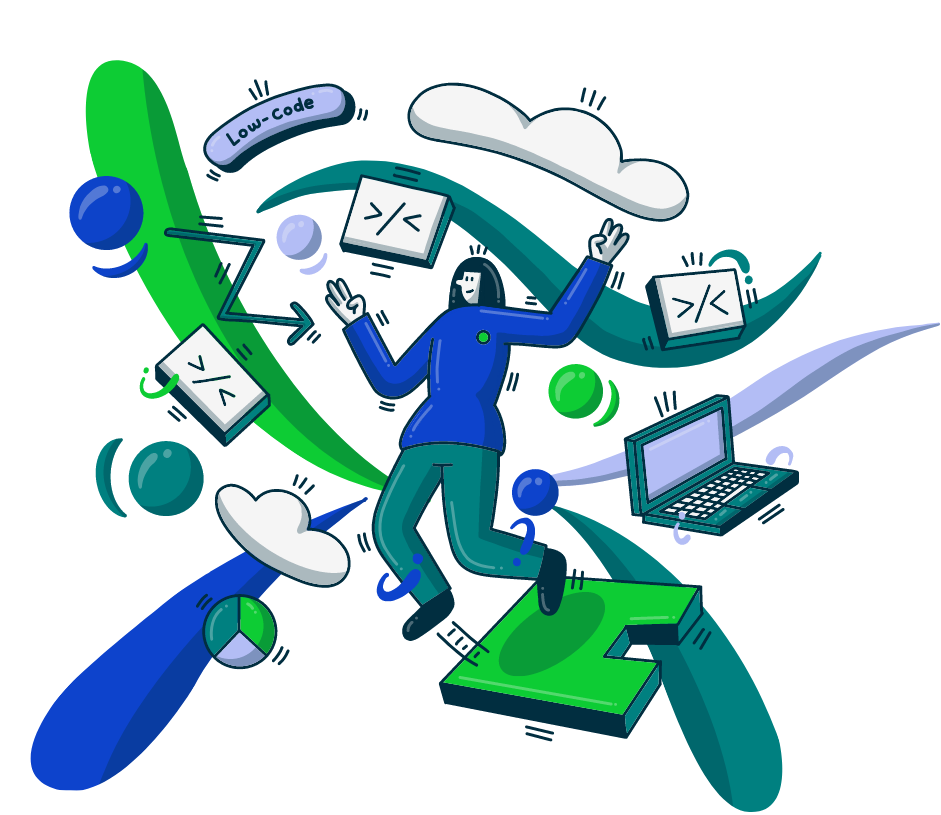
The three models.
Traditional software is licensed and installed on your own infrastructure. You own the hardware, manage the upgrades, and pay for the implementation every time something changes. When the vendor releases a new version, the upgrade is a project in itself. When your operations change, you go back to the vendor.
SaaS (Software-as-a-Service) removes the infrastructure burden. The software runs in the cloud, the vendor manages the upgrades, and you access it via a browser. But the application is still predefined. You configure it within the limits the vendor has set. When your operations don’t fit the template, you work around the software.
PaaS (Platform-as-a-Service) is different. The vendor provides the infrastructure, security, calculation engine, and interface components. The applications are not predefined. Your domain experts, working with their partners, configure solutions that reflect how your business actually works. When something changes, the people who understand the process update it directly.
EnergySys is a PaaS.
Why it matters for complex operations.
In straightforward operational environments, a well-designed SaaS product is often the right answer. The workflows are standard, the reporting requirements are consistent, and the vendor’s predefined application fits well enough.
Complex, regulated operations are different. Allocation rules vary by asset and contractual arrangement. Reporting requirements differ by regulator and jurisdiction. Joint venture agreements introduce their own calculation rules. Methodologies change with regulation. Assets are acquired and divested.
A predefined SaaS application handles this complexity up to a point. Over time, as operations evolve and requirements shift, the gap between what the software does and what the business needs grows. Workarounds accumulate. Data quality suffers. The system becomes a constraint rather than a capability.
A PaaS allows the applications to evolve alongside the business. The infrastructure, security, and core platform capabilities stay constant. The workflows, data models, and calculations are updated directly by the people who understand them. No development queue. No vendor release cycle. No upgrade project.
What you get with EnergySys.

A fully managed platform
EnergySys runs on AWS. Hosting, security, upgrades, and disaster recovery are all handled. You focus on your operations.
Open, auditable logic
Calculations run in Excel workbooks linked into the platform. Every step is visible and traceable. When a regulator asks how a figure was produced, you can show them the full working.
Separation of platform and application
The platform is upgraded independently of the applications built on top of it. New platform capabilities become available without touching your configuration. No migration projects. No regression testing.
One subscription
Platform, hosting, upgrades, and support under a single annual subscription. No hidden fees. No expensive upgrade projects.
Enterprise-grade security
Annual SOC II Type 2 audit. ISO 27001 certified—greater than 99.95% uptime. Data is encrypted in transit and at rest.
The role of partners.
PaaS puts configuration in the hands of domain experts. In practice, most organisations work with a reseller partner to get there. Partners bring the domain knowledge, the configuration expertise, and, in many cases, application frameworks already built and refined across previous deployments.
If your operations change or your partner changes, your system stays intact. The applications belong to the organisation that commissioned them. Nobody is locked in.
Is EnergySys right for your operations?
EnergySys works best for organisations with complex, data-heavy operations where workflows are specific to the business, reporting obligations are significant, and the need to adapt quickly is ongoing.
Get in touch and we’ll help you understand whether it’s the right fit.

